
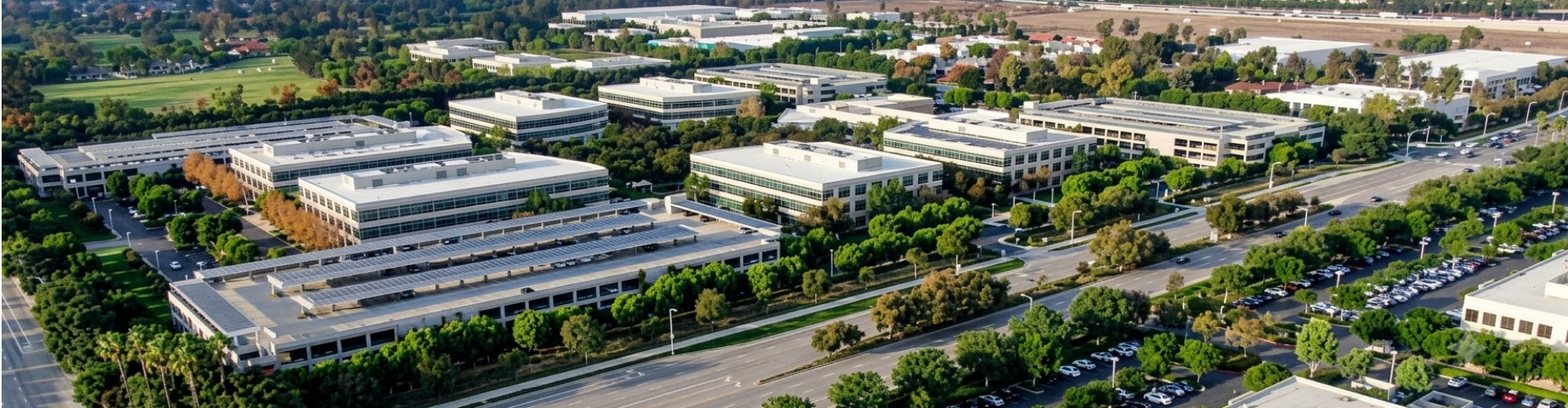
Rethinking how cooling is delivered
Rising temperatures, rapid urban growth, and increasing electricity demand are placing greater pressure on power grids. Traditional building-by-building cooling also uses valuable space, requires separate maintenance, and can operate below its best efficiency. District cooling offers a more coordinated, scalable, and sustainable way to meet growing cooling demand.
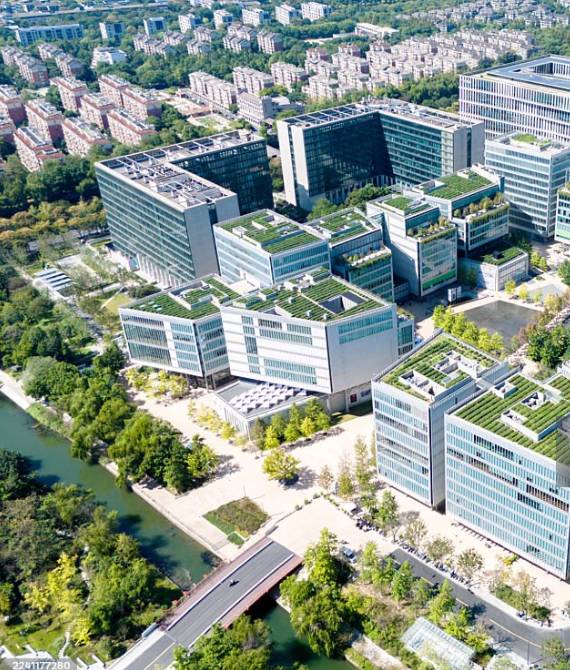
Designed for cities and industrial sectors
For residential communities and commercial developments, district cooling provides a reliable way to deliver consistent comfort across multiple buildings. It reduces noise, frees up rooftop and plant-room space, and simplifies cooling management through shared infrastructure.
In industrial areas, district cooling supports high-capacity and continuous cooling needs across manufacturing facilities, logistics hubs, and data centers. It also provides dependable climate control for hotels, shopping malls, hospitals, airports, leisure facilities, and water parks, where stable performance is critical to daily operations and customer comfort.
How it works
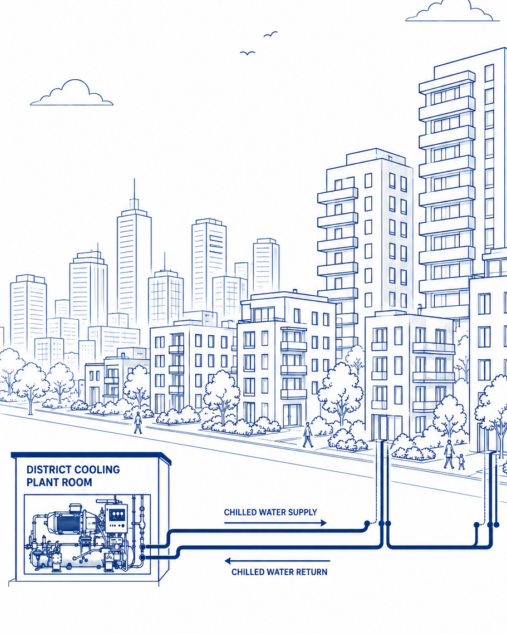
The process begins at a centralized plant, where industrial chillers produce chilled water at the required temperature. High-efficiency pumps then distribute this water through a network of insulated pipes to connected buildings and facilities.
Inside each building, a heat exchanger transfers the cooling energy from the district network to the building’s internal air-conditioning system. The chilled water does not mix with the building’s internal water loop, allowing the network to operate safely and efficiently.
After absorbing heat from the building, the water returns to the central plant at a higher temperature. It is cooled again and recirculated through the network. This closed-loop process provides a continuous supply of cooling while allowing plant performance to be monitored, controlled, and optimized from one central location.
Why district cooling matters
Reduce energy costs
Improve cooling efficiency across the development and lower long-term operating expenses.
Maximize valuable space
Centralized cooling reduces the need for individual equipment and frees up valuable building space.
Drive low-carbon growth
Lower energy use and emissions while supporting future expansion and decarbonization goals.
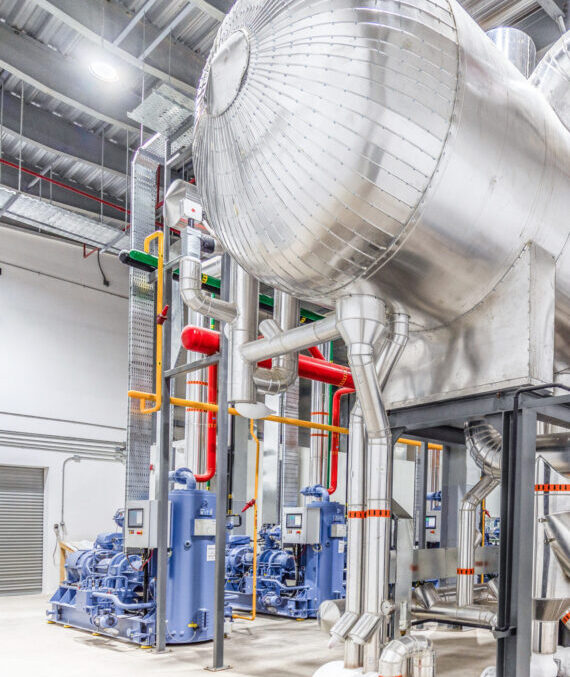
Our solution for district cooling
GRADE provides industrial refrigeration plants designed for demanding district cooling applications. Using natural refrigerants such as ammonia or CO₂, centralized chilled water production improve efficiency, reduce emissions, and lower lifecycle costs. Our scope covers engineering, integration, installation, commissioning, controls, and long-term service.
