
Friday’s Ice Cream: Scaling Egypt’s cold chain with multi-stage ammonia refrigeration
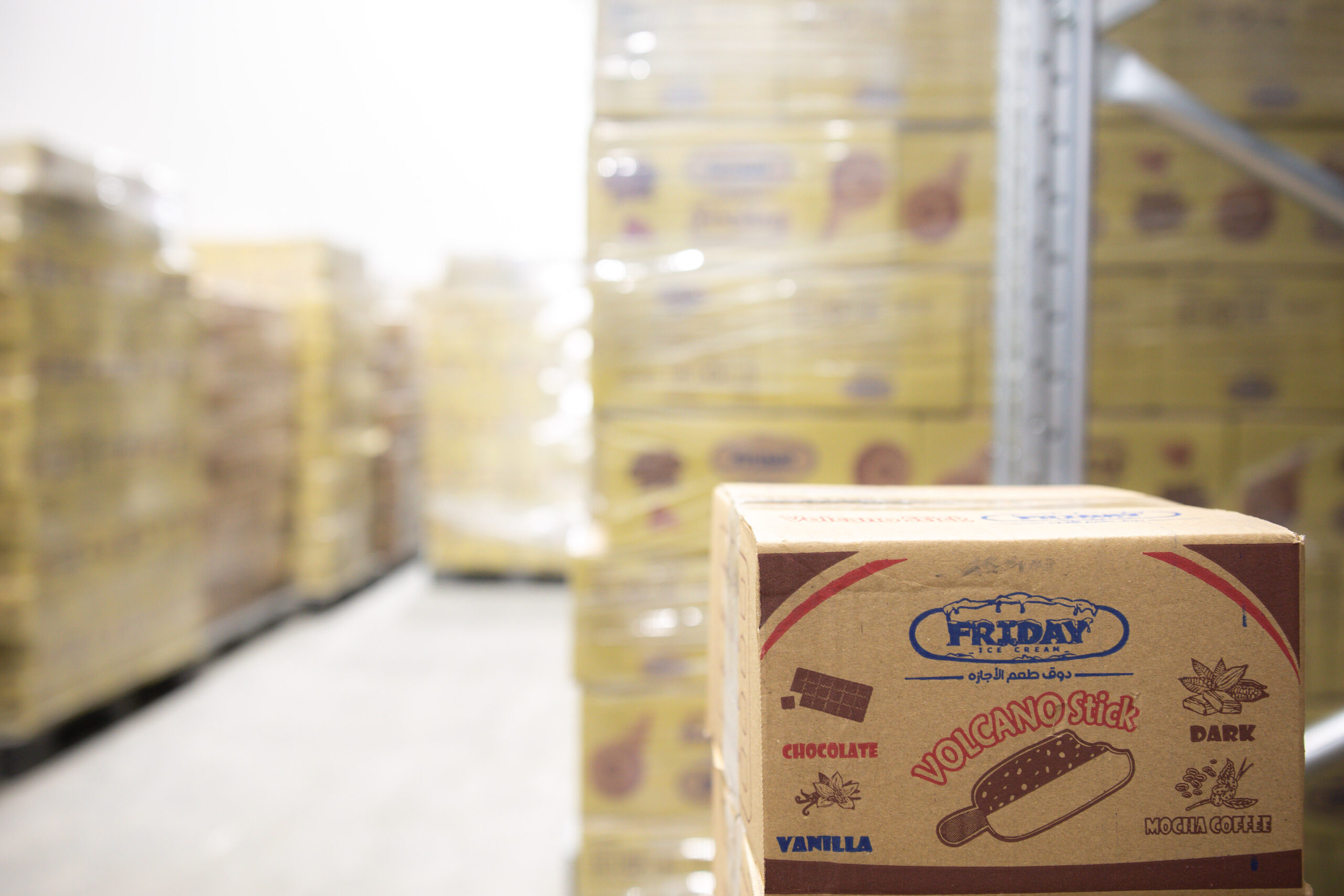
Friday’s Ice Cream, founded in 1970 as a small family business, has grown into one of Egypt’s leading frozen dessert manufacturers. Operating from 10th of Ramadan City, the company produces around 400 million ice cream units annually across sticks, cones, and cups. This scale has positioned Friday’s as Egypt’s largest producer and distributor. To support global ambitions, the company has completed a major new factory development, including a 10,000 m² warehouse complex and a 26,000 m² production and management facility.
Motivation & challenge
Ice cream production requires precise temperature control across multiple stages, from ultra-low temperatures of -47°C for hardening to medium-temperature loads for pasteurization, aging, and facility cooling. With expanding capacity, a high-performance, scalable refrigeration system was required.
Solution: Multi-stage ammonia refrigeration system
Delivered through collaboration with GEA, the solution includes two integrated ammonia-based plants:
Plant 1
The first plant supports the logistics and cold storage backbone of the operation. This two-stage central ammonia system manages freezer rooms, loading corridors, and associated facility cooling.
Technical highlights include:
- Capacity: Total installed capacity of 1,300 kW across low and high stages
- Infrastructure: 26 air coolers, chilled water supply for administrative zones, and central SCADA monitoring for real-time operational visibility
- Four GEA screw compressor packages
Plant 2
The second plant forms the core refrigeration system for ice cream production. This multi-stage installation supports extrusion lines, continuous freezers, process chilling, and factory-wide cooling demands.
Technical highlights include:
- Three temperature zones
- Ultra-low stage at -47 °C for hardening processes
- Low stage at -37 °C for freezing applications
- Medium stage at -3 °C for process water and air conditioning loads
Results & impact
The installation enables high-capacity, energy-efficient cooling using ammonia (NH₃), supporting both production and storage with precision. The system is designed for scalability, ensuring long-term performance as operations expand.


Read more case studies

